An article written by AEI talks about the likelihood of children out-earning their parent's, particularly wealthy parents, and particularly how this likelihood is declining. I think this statistic is very true. Of course, coming from rich and successful parents does not incline one to have to become another groundbreaking businessman and make millions. Some people desire a more "normal" lifestyle. Yet even with these drawbacks, I still believe there is a problem in our current generation, and I think some of these problems come from the parent's of the kids.
If someone wants to become successful, first they must have a legitimate desire to succeed. And if a kid grows up living a rich lifestyle, his parents always providing for him, etc. why would he have a desire to support himself when he is already being excessively supported by his parents? When my sister was in college, she had many different roommates, and many times she has told me stories of her roommate being someone who doesn't try in school, doesn't work, doesn't even help around the apartment, but still has money for a nice car, nice clothes, etc. As my sister would probably say, they are extremely lazy and rude. But why is this? Because their parents provide everything for them, and when everything is already being provided, why should there be a need to try for anything?
I don't say all this to claim parents are the sole problem of their children not becoming successful, for a parent obviously cannot control the actions that their son or daughter takes, but I think they definitely can influence them. If a parent stops providing every little thing for their child and in turn teaches them the importance of hard work, then I believe that kid will grow up with a better mindset of how to become successful in what he chooses to do. My parents are a little more well off than others, and they definitely could spoil me a lot more than they do, but they choose not to because they know I will become prone to being lazy and it will be harder for me appreciate the value of hard work. So instead, everything I buy always comes from my own money, and in order to do that I've had to get a job and start providing for myself. At times it's a little troublesome but I appreciate my parents forcing me to work hard for what I want because I know it will build important traits for me in the future, and I think all parents should do the same.
Sunday, May 21, 2017

Saturday, April 29, 2017
How the Music Industry Effects Popular Music Culture
How the Music Industry Effects Popular Music Culture
Music is no doubt one of the most popular, as
well as populated, forms of media today. I’m sure, without even asking, I can
assume that everyone in this room actively listens to music. In fact, according
to Nielsen’s Music 360 report from 2014, “93% of the U.S. population listens to
music, spending more than 25 hours each week jamming out to their favorite
tunes. In fact, 75% of Americans say they actively choose to listen to music,
which is more than they claim to actively choose to watch TV,” which comes at
around 73% (Everyone). But what many may not know is that by simply
listening to music, consumers are affecting the lives of artists in a big way.
However, even more control is put upon artists and even consumers too by the
likes of record labels, managers, big corporations, etc. Many may not realize
it, as they carelessly continue to listen to their favorite radio station, but
the industry is virtually responsible for what and who gets played on the
radio, what becomes popular, and, essentially, what the average consumer will
listen to and like.
Even more control is put upon the music
artists and producers, however. In a business world where artists charge venues
hundreds of thousands of dollars to book them while others must pay the venue
themselves just to get a gig, money is obviously wildly unequal, and everyone
is rushing to be the next star. Once again, this can be sourced back to the big
corporations and labels. When nearly all the money is found at the top, artists
rush to get signed by big labels and reach global status. Yet, when labels
limit their releases to only specific genres or styles, it creates an
over-saturation of similar-sounding and uninspired tracks.
In a forum through the popular site Reddit, a
user asked “In your opinion, what is the biggest problem with EDM (electronic
dance music) nowadays?” Various people responded, making comments such as “Too
many people in it solely for fame.”, “Over saturation of tracks that often are
indistinguishable from each other.” or “The lack of M in EDM.” One made the
statement “[EDM] is just hard to be original. It’s basically making music so
people can jump, get high, drunk, party and [stuff] like that” (In Your
Opinion). This commenter makes an important observation. Many people and
artists have criticized EDM’s recent movement as being too commercial and
lacking any real character. As the commenter said, labels have curated a
following of songs lacking originality and made essentially for the sole
purpose of making someone jump up and down. Many music artists would not be so
brave to talk about this issue as Porter Robinson.
In 2014, Porter Robinson shocked the pop
culture scene when he came clean and spoke his true feelings on the current
state of EDM. In 2010, before the age of 20, Porter Robinson had struck fame and
in the following years he would go on to work with some of dance’s biggest
artists such as Skrillex and Lady Gaga. His fame also brought him performances
at some of dance’s biggest festivals such as Ultra and Tomorrowland (Nijjar). Yet,
as his name grew bigger, he quickly realized he was not happy with the music he
was making as well as the current EDM scene. Porter Robinson soon gained more
attention from his open and transparent thoughts. In an interview with NME, he states:
[EDM]
is quite functional. It exists to make people go crazy and to me, in a lot of
ways, it’s entertainment, it’s not art. In terms of expression, I think there’s
kind of a ceiling to what you can do when you’re trying to operate within this
tiny little circle of stuff that can make people go crazy and jump up and down.
Porter
Robinson makes the bold statement of “EDM is entertainment, it’s not art.” I
believe Porter Robinson implies that many times, within the dance scene,
artists are now making tracks without any real sentimental attachment or
meaning, but rather only making songs for the sole purpose of having a good
time, or “entertainment.” Porter Robinson wanted change. He wanted to show true
emotion but realized there was a lack of control in the music he was making. He
makes this distinction in another interview with Radio.com. The interviewer
asks him “what are your thoughts on the current state of DJ’s and EDM?”, to
which Porter Robinson replies, “I think that there are requirements when you’re
making a big, mainstage smash song. There are rules. There are things you have
to do and if it doesn’t succeed in making people jump up and down and go crazy
then the song is not successful. It fails as an EDM sing.” These requirements
and restrictions became so detrimental to Robinson that it even began to affect
his health. While talking with The Fader, he explains:
Last
year, I literally had like four or five full-blown anxiety attacks onstage.
When I was in Australia, that’s when it was at its worst. I was yelling at fans,
“Dance music is terrible!” I fully...freaked out. I was playing these songs,
and people were dancing, and they were watching me, and I remember feeling,
‘These people, their...week is this. They spent money on these tickets. They’re
excited to see me, and they think I stand for all these things.’ I would play
these songs I don’t like that much, and they’d do well, and then I was trying
to play this Chrome Sparks record that I thought was so good, and it didn’t go
off. I tried a few more times, playing other songs I thought were better and
more to my taste, and I remember Aaron, my manager, and Dan, my tour manager,
coming onstage like, “Dude, just get through the hour. It’s going to be okay.
Remember, you’re doing this...so you can do what you love” (Cooper).
Many
artists may not go through as serious mental struggles as Porter Robinson did,
but, on the contrary, many will also not be willing to be so open and
transparent with how they feel. Porter Robinson coming clean with his feelings
towards the EDM and pop culture scene was a first of its time, but it helped
mark a new era of creativity within a stagnant bubble of music, something which
arguably can be one of the most important elements within any career or hobby.
Although the mention of religion is something that generally is avoided within
pop culture, when it comes to the issue of creativity and self-expression, a
look into the Judeo-Christian worldview will show many similarities to the same
points that Porter Robinson was speaking for.
Roman Catholic, Eastern
Orthodox, Mainline Protestant, All these denominations have the same belief that
music is a form of expression and a way to give praise to God (Theology; Saint
Lawrence; Fr. Avram Brown). Like Porter Robinson was talking about when he
describes a lack of originality and a want for creativity, in the Christian
faith, we are called to model after God, and God being the creator of all
things, which is creative in nature, we too are called to be creative as a way
of glorifying God. In a secular world where often money and popularity are the
ultimate goal, sometimes it is already assumed for the man without God to
choose the path that leads to those material items. Yet, with God in the picture,
suddenly desire goes beyond the materialistic item, but nothing will come
without struggle. So, in the same way that there is a struggle within pop
culture to find originality, there will also inevitably be a struggle when, as
Christians, we are called to be creative as an expression of spirit and worship
(Fr. Avram Brown)
This call for expression through music has been practiced since early Christian
history. As far back as Genesis 4:21, we see a mention of musical instruments. Throughout
the Bible, there are various other mentions of using music as a form of
worship. “I will sing of your love and justice; to you Lord, I will sing
praise” (New King James Bible, Psalm
101.1). “The Trumpeters and musicians joined in unison to give praise and
thanks to the Lord. Accompanied by trumpets, cymbals and other instruments, the
singers raised their voices in praise to the Lord and sang : ‘He is good; his
love endures forever’” (New King James
Bible, 2 Chronicles 5.13). Since God created the heavens and the earth, men
and women, as children of God, have been called to give him praise and, as seen
in these few verses, people have been using music as a way of self-expression
and to worship God for thousands of years, and still today, music has
transformed throughout time and now in almost every type of church service,
Songs are sung throughout the service as a way to glorify God.
Now, in modern times, music dominates the media platform, yet self-expression
and creativity seem to be a fleeting memory. This idea is not put to thought by
only Porter Robinson, however. Various other artists within the pop culture and
EDM scene have expressed their concerns for the current state as well as future
of this dance platform. Possibly most surprising to comment on this issue was
Diplo. At 38 years old, Diplo has been within the EDM scene for nearly two
decades and many argue he is one of the most influential figures within dance
music, being responsible for pioneering it to the global success it has
received. In 2016, Diplo was awarded “Dance Artist of the Year” by Billboard,
and following his year-end success, Billboard interviewed Diplo in which he
made a shocking statement:
The
DJ world is the corniest...group of people. We’re not celebrities, we’re not
famous for any good reason. We’re just … really lame. Besides people like
Dillon Francis, who makes fun of the whole thing, or Calvin Harris, it’s a
sinking ship. It’s a really lame culture. I’m sad that i’m part of it, but I
play the game (Ringen).
Diplo
quickly gained backlash from this comment, with people mocking him for
criticizing the culture that he essentially molded himself. But, among the
hateful words, Diplo’s statement brought out the thoughts of other like-minded
artists like Kill The Noise and Craze, both prominent figures in the dance
scene. Both went to Twitter to say some supportive words for Diplo, saying
“‘edm is wack except for my friends - Diplo’ to be honest I don’t think there’s
anything wrong with that statement. That’s how I feel too,” and “Yes I agree
EDM DJs are a sinking ship...and lame...He said it not me” (Magnetic). Diplo is
not the only big name to have a few words to say about the dance scene,
however. Dating back even farther than Diplo, Carl Cox has his own opinion of
everything that is happening now. In an interview with Dancing Astronaut, Carl
Cox said “I don’t think it’s underground vs overground,’ I just think it’s pop
culture versus people who actually love the music. Some of these people have no
clue why they are standing in front of these DJs in the first place.” While
possibly a little harsh, Carl Cox brings some light to the issue later in the
interview when he says:
The
pop culture stuff - I don’t think it’s damaged anything. It’s opened people up
to a whole new sound and eventually they will grow out of what’s commercial and
pop and find the thing that keeps them coming back for years and years. As long
as you have a heart and soul and a passion for what you are doing people will
find you (Spada).
Carl
Cox brings positivity to an issue that seemingly only received negative credit,
and while what he says might be true, unfortunately it is often not the case as
artists rush to get money. Once again, we can draw this issue back to the big
labels and corporations.
Another issue that many may be oblivious to is how little profit artists
actually receive back from their sales. While big name artists are making tens
of millions of dollars, mid-tier to low-tier artists earn little to nothing. In
a post on Tumblr, music artist Nick Thayer broke down exactly how much money he
makes. “People often think there’s a huge amount of money in this scene,” he
says. “There is, but it is very concentrated and in the hands of very, VERY few
people.” In 2012, Nick Thayer released a ten track EP named Like Boom. In
total, the EP made around 13,000 sales. For simplicity’s sake, each sale is two
dollars each, and for each sale, there is roughly a 50% split for the site that
sells it. After this, there is another 50% split with the label. On top of
these splits, there is yet another cut with any remixers or vocalists that are
featured on the songs. After all the cuts, Nick Thayer’s profit from 13,000
sales comes down to less than 4,000 dollars, but the expenses don’t end here.
As Nick Thayer explains, he must then pay for the management cut,
professionally mastering each track, artwork that is useable across all
platforms, publicity campaigns, and other small fees. After all the expenses
are calculated, shockingly, Nick Thayer shows he ended up losing money after
his release rather than earning (Thayer). He acknowledges that there are areas
he could have cut costs down, but his evaluation is still a very real, yet sad
reality that many up and coming artists face. As Nick Thayer said, money
circulating around the music industry is very concentrated and only in the
hands of the biggest stars. The industry is greedy, and artists know it. In an
interview with Thump, music veteran Fatboy Slim makes a bold statement, “Make
no mistake,” he says, “EDM will crash and burn. It’s based on a pyramid scheme
of making money and as soon as it stops making money the whole house of cards
will fall down” (Baines).
In
the music industry, it is extremely difficult to become successful and the
people working in it don’t make it any easier. To truly acquire flourishing
within this business, it requires cooperation on the artists end as well as the
consumers. In an industry where there is constant bombardment to sound a
specific way, it is the artist’s job to believe in their own work, not someone
else’s. But artists cannot fuel their creativity without the support of the
consumer. “Please support artists you like in any way you can think of,” says
Nick Thayer. “Buy the whole EP when they release it instead of just one song.
Share the links to their music on Facebook or Twitter or re-post them on
Soundcloud. You would not believe the difference this can make” (Thayer). If
possible, donations also make a huge difference in the lives of artists. Ultimately,
we choose whether we want to make a difference or not, it will not happen over
time. When it comes down to the EDM industry, I believe music artist Reid Speed
sums it up in the best way possible:
when so much of ‘what sells’ in EDM today is just marketing
at work, and when what is being sold is often not even made by the person who
collects the paycheck for maybe not even really playing the show, we have a
serious disconnect at play. Do YOU really want that? Do YOU really want to see
more ghost-produced button pushers winning because they have the biggest
marketing budget? Or would you prefer to see authentic artists reaping the
benefits of their talents? The choice is ours (Calvano).
Works Cited
Baines, Josh. “Fatboy Slim: “Make no mistake: EDM Will Crash
and Burn”.” Thump. Vice
Media, 02
June 2015. Web. 22 Mar. 2017.
Fr. Avram Brown. Personal interview. 6 Mar. 2017.
Calvano, Jordan. “Reid Speed Perfectly Sums Up The
Underground vs. EDM Debate With One
Image.” Magnetic Magazine. Magnetic Magazine, 09
June 2015. Web. 20 Mar. 2017.
Cooper, Duncan. “Porter Robinson Conquered EDM, and Now He
Wants More.” The Fader.
The Fader,
31 July 214. Web, 22 Mar. 2017.
“Everyone Listens to Music, But How We Listen Is Changing.” Nielsen. The Nielson Company,
22 Jan.
2015. Web. 13 Feb. 2017.
The Holy
Bible. Nashville, TN: Thomas Nelson, 2006.
Print.
“In Your Opinion, What Is The Biggest Problem With EDM
Nowadays?” Reddit. Reddit Inc.,
n.d. Web. 2
Feb. 2017.
Magnetic. “Artists Respond to Diplo Regarding His Comments on
EDM and the Industry.”
Magnetic Magazine. Magnetic Magazine, 13
June 2016. Web. 20 Mar. 2017.
“Theology of Music.” St
Peter’s Anglican Church. St Peter’s Anglican Church, n.d. Web. 20
Mar. 2017.
Nijjar, Aneet. “Porter Robinson.” Billboard.com. Billboard Music, n.d. Web. 21 Mar. 2017.
NME. Porter Robinson
Interview: ‘EDM is entertainment, It’s Not Art’. Online Video Clip.
Youtube. Youtube, 5 June 2014. Web. 13
Mar. 2017.
Radio.com. Porter
Robinson on DJing and the State of EDM. Online Video Clip. Youtube.
Youtube, 12 Aug. 2014. Web. 13 Mar. 2017.
Ringen, Jonathan. “Diplo
on Why DJ Culture Is a ‘ Sinking Ship’ and Wishing He Was
Beyoncé.” Billboard. Billboard Music, 6 Sept.
2016. Web. 20 Mar. 2017.
“Saint Lawrence Orthodox Church Liturgical Music.” Saint Lawrence Orthodox Christian
Church. Saint Lawrence Orthodox Christian Church. n.d. Web. 20 Mar.
2017.
Spada, Andrew. “Carl Cox Reflects On Miami Music Week, Ultra,
and the Growth of a
Movement.” Dancing Astronaut. Dancing astronaut, 26
Mar. 2014. Web. 21 Mar. 2017.
Thayer, Nick. “Do You Wanna Know Just How Much Money I Make?”
Like Boom. Tumbler, 24
Mar. 2014.
Web. 22 Mar. 2017.
Saturday, April 22, 2017
The importance of being different
When I watched Tim Harford's presentation for TED Talks on "How frustration can make us more creative" I couldn't help but connect it to my senior project topic of "How the music industry is affecting popular music culture." Harford constantly makes it clear that by encountering struggles and frustrations, we are forced to think outside of the box making our creative process prosper even more than if there were no problems to begin with. However, like I address in my senior project, within the music industry, or any industry really, there seems to be a push to remove any forms of creativity. Taking the hard way and being different is frowned upon and instead taking the easy way and being just like everyone else is the popular choice.
Nowadays, individuality seems very distant within any creative industry (music, art, fashion, etc.) and, while Harford's ideology of struggles is very much true, it is the exact opposite of what society tells us today. Why work extra when you don't need to? Do the least amount of work possible. That is what society tells us today. Similarly, within the creative industries, artists are pressured to copy what's popular and stay away from individuality. But when copying what's popular brings popularity as well as money, can you blame the artists?
Why does creativity and individuality even matter though? If we can obtain quicker results by doing less work wouldn't that be the better option? As said earlier, that is what society has been saying is the better choice, but through overcoming challenges we are able to mature and overall be more productive in the future. If we settle for what's easy now then soon our whole demeanor becomes lazy and in the future, it will become gradually harder to overcome obstacles that arise.
In Harford's talk, he uses the example of jazz pianist Keith Jarrett. Jarrett was preparing for a concert, however, the concert house had made a mistake and provided the wrong piano. Jarrett was about to give up on his concert and go home, but he decided to overcome his problem and perform. Jarrett's performance came to be the best selling piano and solo jazz album in history, all because he worked through his problems rather than avoiding them.
The industry will always be hungry for money and will do anything to maximize its profit. So ultimately it is our own choice to change. It has become natural to simply follow the rubric and when frustration arises, find the easiest possible way to avoid it. But by overcoming our problems we can grow and mature. As Harford says, "However we do it, all of us from time to time need to sit down and try to play the unplayable piano."
Nowadays, individuality seems very distant within any creative industry (music, art, fashion, etc.) and, while Harford's ideology of struggles is very much true, it is the exact opposite of what society tells us today. Why work extra when you don't need to? Do the least amount of work possible. That is what society tells us today. Similarly, within the creative industries, artists are pressured to copy what's popular and stay away from individuality. But when copying what's popular brings popularity as well as money, can you blame the artists?
Why does creativity and individuality even matter though? If we can obtain quicker results by doing less work wouldn't that be the better option? As said earlier, that is what society has been saying is the better choice, but through overcoming challenges we are able to mature and overall be more productive in the future. If we settle for what's easy now then soon our whole demeanor becomes lazy and in the future, it will become gradually harder to overcome obstacles that arise.
In Harford's talk, he uses the example of jazz pianist Keith Jarrett. Jarrett was preparing for a concert, however, the concert house had made a mistake and provided the wrong piano. Jarrett was about to give up on his concert and go home, but he decided to overcome his problem and perform. Jarrett's performance came to be the best selling piano and solo jazz album in history, all because he worked through his problems rather than avoiding them.
The industry will always be hungry for money and will do anything to maximize its profit. So ultimately it is our own choice to change. It has become natural to simply follow the rubric and when frustration arises, find the easiest possible way to avoid it. But by overcoming our problems we can grow and mature. As Harford says, "However we do it, all of us from time to time need to sit down and try to play the unplayable piano."
Sunday, April 2, 2017
Smith and economic continuity
A pioneer of his time, Smith has now become known as the father of economics, with his ideas being the basis of modern economic standards. Most notable for his book "The Wealth of Nations," Smith also wrote another book titled "The Theory of Moral Sentiments." Both which harbor his great economic zeal. Throughout his work, Smith pushes, above all, the idea that for an economy to thrive, it must also coexist within a thriving population. I.e. for economic flourishing to occur, inevitably there must also exist human flourishing.
Within Smith's writings, his philosophies rely heavily on the ideas of self-interest and maximizing return. Each person, by looking out for his or her own needs, will inadvertently create the best possible outcomes and situations. "It is not from the benevolence of the butcher, the brewer, or the baker, that we can expect our dinner, but from their regard to their own interest," Smith wrote. In a society where people, all specialists in a specific area, work to meet their own needs in the best way possible, their efforts will, in turn, benefit the society as a whole. Smith created a metaphor to better explain this known as the invisible hand. Smith explains that within a society based upon individual self-interest, flourishing will occur by an "invisible hand" that guides supply and demand, creating the greatest good for all. each individual focusing on their own needs will essentially benefit the group as a whole. And within a society solely driven by self-interest, the greatest flourishing occurs, through the help of the invisible hand as Smith explains.
Though Smith focuses heavily on self-interest, he also stresses the idea of the division of labor. Another popular example by Smith is the work it requires to make a pin. If it requires 18 different steps to create a pin, one man accomplishing every step will only make a handful of pins a week. But if those 18 steps were rather divided among 10 different men, then production would increase to thousands of pins a week, rather than the unsatisfying handful made by the one person. Smith argues that through the division of labor and specialization, prosperity is created. "It is the great multiplication of the productions of all the different arts, in consequence of the division of labor, which occasions, in a well-governed society, that universal opulence which extends itself to the lowest ranks of the people," states Smith.
Adam Smith pioneered many philosophies about the art of economic flourishing that have become cornerstones in today's world. But it wasn't through single-minded thoughts that Smith became such a scholar. Understanding the relationship between human flourishing and economic liberty was what stood Smith apart from others. More than that, though, Smiths ability to understand that an unbreakable bond between the two must be in place for true flourishing to occur has made Smith as great as he is.
Within Smith's writings, his philosophies rely heavily on the ideas of self-interest and maximizing return. Each person, by looking out for his or her own needs, will inadvertently create the best possible outcomes and situations. "It is not from the benevolence of the butcher, the brewer, or the baker, that we can expect our dinner, but from their regard to their own interest," Smith wrote. In a society where people, all specialists in a specific area, work to meet their own needs in the best way possible, their efforts will, in turn, benefit the society as a whole. Smith created a metaphor to better explain this known as the invisible hand. Smith explains that within a society based upon individual self-interest, flourishing will occur by an "invisible hand" that guides supply and demand, creating the greatest good for all. each individual focusing on their own needs will essentially benefit the group as a whole. And within a society solely driven by self-interest, the greatest flourishing occurs, through the help of the invisible hand as Smith explains.
Though Smith focuses heavily on self-interest, he also stresses the idea of the division of labor. Another popular example by Smith is the work it requires to make a pin. If it requires 18 different steps to create a pin, one man accomplishing every step will only make a handful of pins a week. But if those 18 steps were rather divided among 10 different men, then production would increase to thousands of pins a week, rather than the unsatisfying handful made by the one person. Smith argues that through the division of labor and specialization, prosperity is created. "It is the great multiplication of the productions of all the different arts, in consequence of the division of labor, which occasions, in a well-governed society, that universal opulence which extends itself to the lowest ranks of the people," states Smith.
Adam Smith pioneered many philosophies about the art of economic flourishing that have become cornerstones in today's world. But it wasn't through single-minded thoughts that Smith became such a scholar. Understanding the relationship between human flourishing and economic liberty was what stood Smith apart from others. More than that, though, Smiths ability to understand that an unbreakable bond between the two must be in place for true flourishing to occur has made Smith as great as he is.
Thursday, March 30, 2017
Why happiness matters
World Happiness Report 2017 - Norway is the world's happiest country, and The United States falls into 14th. Yet despite being ranked 14th, writer James Pethokoukis still says he'd "take economic growth over happiness any day." Of course, each man is entitled to his own opinion, but, personally, I think happiness matters more than economic growth. First, I must give context to this statement, however.
Of course, economic growth is important for any country. Even the researchers of the World Happiness Report acknowledge this. High incomes "may not buy happiness in general, but it gives individuals the opportunity to be healthier, better educated, better clothed, and better fed, to live longer, and to live well." This is especially true in countries where most of its citizens live in poverty. But this is where the differences come in. In a 3rd world country, someone who lives in poverty only cares for living a better life outside of that poverty. Economic growth to the point that it brings its citizens out of poverty will most likely make that country extremely happy. providing a bed to sleep on at night, food to eat, a shower to clean yourself in, etc., all these are huge steps within a country that is struggling economically. But the better off a country is, the less the economic growth actually matters. If economic growth was really the underlying factor for happiness, then the biggest and richest countries would be ranked the highest, but this is simply not true. In fact, China, arguably the world's largest economy, is no happier than it was 25 years ago. "we're getting richer, but our social capital is deteriorating," says Dr. Sachs about the U.S. Once an economy is great enough for its citizens to be self-sufficient, soon economic growth falls to the background, and really what matters is social growth and cooperation. "It's the human things that matter. If the riches make it harder to have frequent and trustworthy relationship with people, is it worth it?" asked John Helliwell, one of the head authors in the WHR report. When looking at America, there is huge evidence of social cooperation becoming more important than economic growth.
"The country is mired in a roiling social crisis that is getting worse," writes Dr. Sachs. "Yet the dominant political discourse is all about raising the rate of economic growth." Dozens of problems infect America's society, and averting focus to economic growth won't fix the issues. Within the needs of America, to make a happy country, there is a need to fix the social construct, not make the economy greater. I don't say this to put economic growth down, but rather say that everything relates to the needs of the country. If a country requires economic growth, then surely focusing on that will increase the overall happiness and value of the country. But if a country faces other issues, such as social cooperation, then surely that is the issue to focus on.
Of course, economic growth is important for any country. Even the researchers of the World Happiness Report acknowledge this. High incomes "may not buy happiness in general, but it gives individuals the opportunity to be healthier, better educated, better clothed, and better fed, to live longer, and to live well." This is especially true in countries where most of its citizens live in poverty. But this is where the differences come in. In a 3rd world country, someone who lives in poverty only cares for living a better life outside of that poverty. Economic growth to the point that it brings its citizens out of poverty will most likely make that country extremely happy. providing a bed to sleep on at night, food to eat, a shower to clean yourself in, etc., all these are huge steps within a country that is struggling economically. But the better off a country is, the less the economic growth actually matters. If economic growth was really the underlying factor for happiness, then the biggest and richest countries would be ranked the highest, but this is simply not true. In fact, China, arguably the world's largest economy, is no happier than it was 25 years ago. "we're getting richer, but our social capital is deteriorating," says Dr. Sachs about the U.S. Once an economy is great enough for its citizens to be self-sufficient, soon economic growth falls to the background, and really what matters is social growth and cooperation. "It's the human things that matter. If the riches make it harder to have frequent and trustworthy relationship with people, is it worth it?" asked John Helliwell, one of the head authors in the WHR report. When looking at America, there is huge evidence of social cooperation becoming more important than economic growth.
"The country is mired in a roiling social crisis that is getting worse," writes Dr. Sachs. "Yet the dominant political discourse is all about raising the rate of economic growth." Dozens of problems infect America's society, and averting focus to economic growth won't fix the issues. Within the needs of America, to make a happy country, there is a need to fix the social construct, not make the economy greater. I don't say this to put economic growth down, but rather say that everything relates to the needs of the country. If a country requires economic growth, then surely focusing on that will increase the overall happiness and value of the country. But if a country faces other issues, such as social cooperation, then surely that is the issue to focus on.
Saturday, March 25, 2017
Why you should invest in Alibaba
Alibaba is the world's largest retailer with operations in over 190 countries. It has made more revenue than Amazon and eBay combined, and, in 2015, its online sales surpassed all US retailers combined. In 2013, Alibaba accounted for over 60% of all packages delivered in China, and in 2014, it accounted for 80% of all online sales within China. Alibaba has over 20 different companies and affiliations including web marketplace Tmall, consumer-to-consumer sales site Taobao, and daily deals site Juhuasuan. Alibaba also owns their own paying network called Alipay as well as their own cloud network called Alibaba Cloud. All of this aside, size and popularity do not determine the success of a company, but Alibaba's statistics still show it is a viable company.
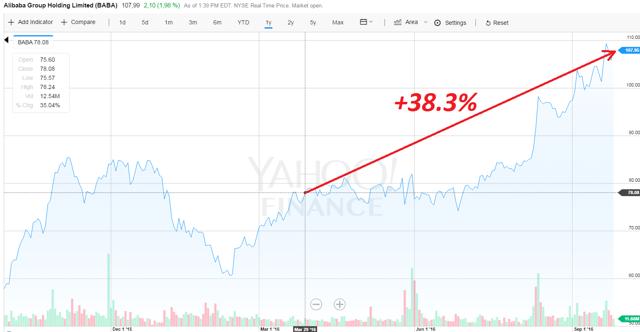
From March to September of 2016, Alibaba showed a 38% growth rate. Despite falling in the months after, the company came back when the new year started, rising over 16% in just the month of January, and it has continued to rise in the months following.
With e-commerce growing every day, Alibaba shows huge potential growth being the largest e-tailer in the world, and it's nearly 450 million active buyers are only expected to grow. As said earlier, China's online sales, as well as package deliveries from 2013 to 2014 can already show the huge impact Alibaba plays in the country. China's online market is estimated to reach 1.1 trillion by 2020, and with Alibaba being the leader in all three of china's e-commerce segments (business to business, business to consumer, and consumer to consumer), the company can only excel in the coming years. Alibaba is not a company only invested in e-commerce, however. As company founder Jack Ma puts it, "this narrow definition of e-commerce is only a fraction of the Alibaba Group strategy." The company is actively establishing itself in various areas of business to help millions of Chinese as well as foreign companies. These areas include e-commerce, financial services, logistics, data and cloud computing, and marketing and trading services.
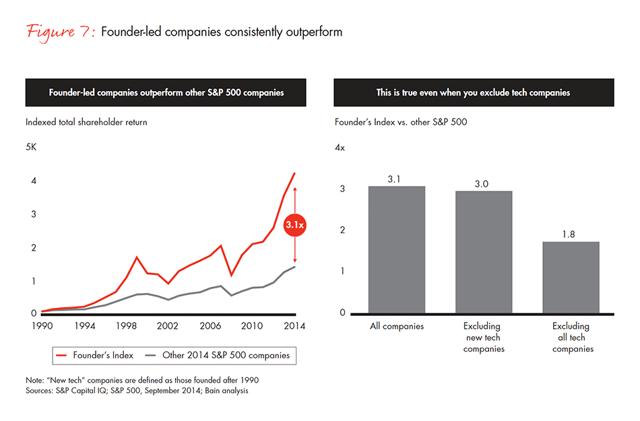
Founder Jack Ma and his management are also great company leaders, and data backs it up. As said by Bain, "Since 1990, founder-led companies have consistently outperformed other S&P companies. From 1990 to 2014, they performed 3.1 times better...Even when we exclude tech companies, founder-led companies outperformed other S&P 500 companies by 1.8 times from 1990 to 2014."
Alibaba might not boast huge numbers immediately, but overall, with the rise in size and popularity of e-commerce, as well as the companies great founder-led leadership, as a long-term investment, Alibaba will certainly reward its clients.
From March to September of 2016, Alibaba showed a 38% growth rate. Despite falling in the months after, the company came back when the new year started, rising over 16% in just the month of January, and it has continued to rise in the months following.
With e-commerce growing every day, Alibaba shows huge potential growth being the largest e-tailer in the world, and it's nearly 450 million active buyers are only expected to grow. As said earlier, China's online sales, as well as package deliveries from 2013 to 2014 can already show the huge impact Alibaba plays in the country. China's online market is estimated to reach 1.1 trillion by 2020, and with Alibaba being the leader in all three of china's e-commerce segments (business to business, business to consumer, and consumer to consumer), the company can only excel in the coming years. Alibaba is not a company only invested in e-commerce, however. As company founder Jack Ma puts it, "this narrow definition of e-commerce is only a fraction of the Alibaba Group strategy." The company is actively establishing itself in various areas of business to help millions of Chinese as well as foreign companies. These areas include e-commerce, financial services, logistics, data and cloud computing, and marketing and trading services.
Founder Jack Ma and his management are also great company leaders, and data backs it up. As said by Bain, "Since 1990, founder-led companies have consistently outperformed other S&P companies. From 1990 to 2014, they performed 3.1 times better...Even when we exclude tech companies, founder-led companies outperformed other S&P 500 companies by 1.8 times from 1990 to 2014."
Alibaba might not boast huge numbers immediately, but overall, with the rise in size and popularity of e-commerce, as well as the companies great founder-led leadership, as a long-term investment, Alibaba will certainly reward its clients.
Saturday, March 11, 2017
The leaders of our future
Let's just jump right in. Are stay at home parents successful? Well, what is the definition of success? Many might say something that earns you a plethora of money, allowing you to live worry-free. While, in many cases, this situation very well may be a success story, it is essentially saying that if you aren't receiving a steady income of cash, you are not successful. But actually, a quick google search of "success definition" shows that success is simply defined by "the accomplishment of an aim or purpose." By this definition, success is no longer bound by cash, but rather anything that someone has accomplished or completed, And I feel this is a much more appropriate definition. In my eyes, someone who makes little or even no cash but is able to do what they love is much more successful than one who makes six figures a year but hates their job. So, to come back to the question, are stay at home parents successful? Yes, they are.
Those that say someone who goes to college and gets a degree just to throw it away and become a stay home parent clearly doesn't understand the significance of raising children. Rather, doesn't understand the importance of education in general. As The Federalist says, "education is not just a synonym for job training." School does much more than just prepare you for your career or job. School helps teach you valuable characteristics that simply prepare you for life. Of course, education will make you..well, more educated, which is always a good thing. But beyond simple knowledge, school helps you be disciplined, studious, self-sufficient, etc. and overall more mature. When one goes to college, many times it is their first time living without their parents and away from home. Often students must get a job to help pay for college and living expenses. And of course, there are classes that you must attend and homework to do. Essentially a schedule to follow. Similar to if you had a job. College is an important period of time that helps nurture young adults into responsible and mature adults. More often than not, one who goes to college will undoubtedly be more mature than one who never went to college and stayed home, forgetting about school or a career.
And to say that, having finished college, choosing to be a stay home parent is a waste of education is a complete disregard for tomorrow's future. Acquiring a good, well-paying job is always a plus, but once you retire, who takes your place? The generation behind us, which is the parents job to raise up to greatness. Becoming a stay home parent to raise your children is vital in the molding of the future generations. This is not to say that two parents who work a job are terrible, for a child can grow to be an amazing man even with two working parents. But rather I mean to imply that one who neglects raising children for thought of using a college degree for a higher purpose has no sensibility for the future, and is also rather narcissistic one could assess.
Subscribe to:
Posts (Atom)