World Happiness Report 2017 - Norway is the world's happiest country, and The United States falls into 14th. Yet despite being ranked 14th, writer James Pethokoukis still says he'd "take economic growth over happiness any day." Of course, each man is entitled to his own opinion, but, personally, I think happiness matters more than economic growth. First, I must give context to this statement, however.
Of course, economic growth is important for any country. Even the researchers of the World Happiness Report acknowledge this. High incomes "may not buy happiness in general, but it gives individuals the opportunity to be healthier, better educated, better clothed, and better fed, to live longer, and to live well." This is especially true in countries where most of its citizens live in poverty. But this is where the differences come in. In a 3rd world country, someone who lives in poverty only cares for living a better life outside of that poverty. Economic growth to the point that it brings its citizens out of poverty will most likely make that country extremely happy. providing a bed to sleep on at night, food to eat, a shower to clean yourself in, etc., all these are huge steps within a country that is struggling economically. But the better off a country is, the less the economic growth actually matters. If economic growth was really the underlying factor for happiness, then the biggest and richest countries would be ranked the highest, but this is simply not true. In fact, China, arguably the world's largest economy, is no happier than it was 25 years ago. "we're getting richer, but our social capital is deteriorating," says Dr. Sachs about the U.S. Once an economy is great enough for its citizens to be self-sufficient, soon economic growth falls to the background, and really what matters is social growth and cooperation. "It's the human things that matter. If the riches make it harder to have frequent and trustworthy relationship with people, is it worth it?" asked John Helliwell, one of the head authors in the WHR report. When looking at America, there is huge evidence of social cooperation becoming more important than economic growth.
"The country is mired in a roiling social crisis that is getting worse," writes Dr. Sachs. "Yet the dominant political discourse is all about raising the rate of economic growth." Dozens of problems infect America's society, and averting focus to economic growth won't fix the issues. Within the needs of America, to make a happy country, there is a need to fix the social construct, not make the economy greater. I don't say this to put economic growth down, but rather say that everything relates to the needs of the country. If a country requires economic growth, then surely focusing on that will increase the overall happiness and value of the country. But if a country faces other issues, such as social cooperation, then surely that is the issue to focus on.
Thursday, March 30, 2017

Saturday, March 25, 2017
Why you should invest in Alibaba
Alibaba is the world's largest retailer with operations in over 190 countries. It has made more revenue than Amazon and eBay combined, and, in 2015, its online sales surpassed all US retailers combined. In 2013, Alibaba accounted for over 60% of all packages delivered in China, and in 2014, it accounted for 80% of all online sales within China. Alibaba has over 20 different companies and affiliations including web marketplace Tmall, consumer-to-consumer sales site Taobao, and daily deals site Juhuasuan. Alibaba also owns their own paying network called Alipay as well as their own cloud network called Alibaba Cloud. All of this aside, size and popularity do not determine the success of a company, but Alibaba's statistics still show it is a viable company.
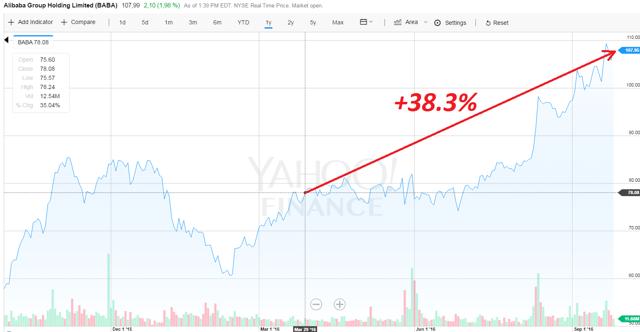
From March to September of 2016, Alibaba showed a 38% growth rate. Despite falling in the months after, the company came back when the new year started, rising over 16% in just the month of January, and it has continued to rise in the months following.
With e-commerce growing every day, Alibaba shows huge potential growth being the largest e-tailer in the world, and it's nearly 450 million active buyers are only expected to grow. As said earlier, China's online sales, as well as package deliveries from 2013 to 2014 can already show the huge impact Alibaba plays in the country. China's online market is estimated to reach 1.1 trillion by 2020, and with Alibaba being the leader in all three of china's e-commerce segments (business to business, business to consumer, and consumer to consumer), the company can only excel in the coming years. Alibaba is not a company only invested in e-commerce, however. As company founder Jack Ma puts it, "this narrow definition of e-commerce is only a fraction of the Alibaba Group strategy." The company is actively establishing itself in various areas of business to help millions of Chinese as well as foreign companies. These areas include e-commerce, financial services, logistics, data and cloud computing, and marketing and trading services.
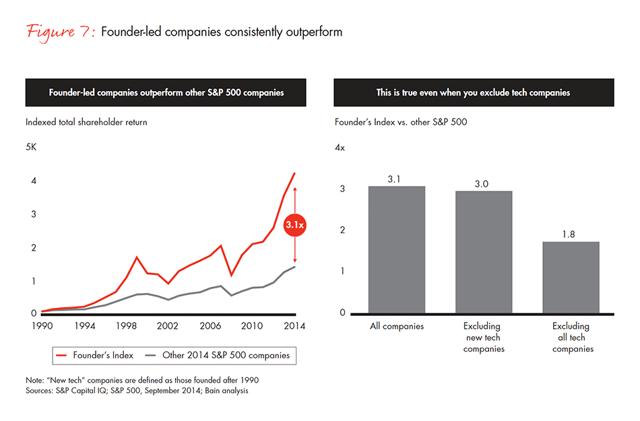
Founder Jack Ma and his management are also great company leaders, and data backs it up. As said by Bain, "Since 1990, founder-led companies have consistently outperformed other S&P companies. From 1990 to 2014, they performed 3.1 times better...Even when we exclude tech companies, founder-led companies outperformed other S&P 500 companies by 1.8 times from 1990 to 2014."
Alibaba might not boast huge numbers immediately, but overall, with the rise in size and popularity of e-commerce, as well as the companies great founder-led leadership, as a long-term investment, Alibaba will certainly reward its clients.
From March to September of 2016, Alibaba showed a 38% growth rate. Despite falling in the months after, the company came back when the new year started, rising over 16% in just the month of January, and it has continued to rise in the months following.
With e-commerce growing every day, Alibaba shows huge potential growth being the largest e-tailer in the world, and it's nearly 450 million active buyers are only expected to grow. As said earlier, China's online sales, as well as package deliveries from 2013 to 2014 can already show the huge impact Alibaba plays in the country. China's online market is estimated to reach 1.1 trillion by 2020, and with Alibaba being the leader in all three of china's e-commerce segments (business to business, business to consumer, and consumer to consumer), the company can only excel in the coming years. Alibaba is not a company only invested in e-commerce, however. As company founder Jack Ma puts it, "this narrow definition of e-commerce is only a fraction of the Alibaba Group strategy." The company is actively establishing itself in various areas of business to help millions of Chinese as well as foreign companies. These areas include e-commerce, financial services, logistics, data and cloud computing, and marketing and trading services.
Founder Jack Ma and his management are also great company leaders, and data backs it up. As said by Bain, "Since 1990, founder-led companies have consistently outperformed other S&P companies. From 1990 to 2014, they performed 3.1 times better...Even when we exclude tech companies, founder-led companies outperformed other S&P 500 companies by 1.8 times from 1990 to 2014."
Alibaba might not boast huge numbers immediately, but overall, with the rise in size and popularity of e-commerce, as well as the companies great founder-led leadership, as a long-term investment, Alibaba will certainly reward its clients.
Saturday, March 11, 2017
The leaders of our future
Let's just jump right in. Are stay at home parents successful? Well, what is the definition of success? Many might say something that earns you a plethora of money, allowing you to live worry-free. While, in many cases, this situation very well may be a success story, it is essentially saying that if you aren't receiving a steady income of cash, you are not successful. But actually, a quick google search of "success definition" shows that success is simply defined by "the accomplishment of an aim or purpose." By this definition, success is no longer bound by cash, but rather anything that someone has accomplished or completed, And I feel this is a much more appropriate definition. In my eyes, someone who makes little or even no cash but is able to do what they love is much more successful than one who makes six figures a year but hates their job. So, to come back to the question, are stay at home parents successful? Yes, they are.
Those that say someone who goes to college and gets a degree just to throw it away and become a stay home parent clearly doesn't understand the significance of raising children. Rather, doesn't understand the importance of education in general. As The Federalist says, "education is not just a synonym for job training." School does much more than just prepare you for your career or job. School helps teach you valuable characteristics that simply prepare you for life. Of course, education will make you..well, more educated, which is always a good thing. But beyond simple knowledge, school helps you be disciplined, studious, self-sufficient, etc. and overall more mature. When one goes to college, many times it is their first time living without their parents and away from home. Often students must get a job to help pay for college and living expenses. And of course, there are classes that you must attend and homework to do. Essentially a schedule to follow. Similar to if you had a job. College is an important period of time that helps nurture young adults into responsible and mature adults. More often than not, one who goes to college will undoubtedly be more mature than one who never went to college and stayed home, forgetting about school or a career.
And to say that, having finished college, choosing to be a stay home parent is a waste of education is a complete disregard for tomorrow's future. Acquiring a good, well-paying job is always a plus, but once you retire, who takes your place? The generation behind us, which is the parents job to raise up to greatness. Becoming a stay home parent to raise your children is vital in the molding of the future generations. This is not to say that two parents who work a job are terrible, for a child can grow to be an amazing man even with two working parents. But rather I mean to imply that one who neglects raising children for thought of using a college degree for a higher purpose has no sensibility for the future, and is also rather narcissistic one could assess.
Saturday, March 4, 2017
Hamilton's legacy

Alexander Hamilton isn't a Founding Father for no reason. Many of his principles have remained as key cornerstones in our government today. But his great thinking didn't emerge until 1775 when he was participating in the Revolutionary War. Hamilton, being diligent and determined, quickly rose among the ranks and soon gained attention from many generals asking for his position as their aide. He declined the offers saying the battlefield was best for him, that is, until George Washington too asked for his aide, an offer he could not refuse. As Washington's new aide, Hamilton wrote letters to congress, drafted orders, and eventually even issuing orders himself for Washington. During this time, he became aware of several issues with congress. Many of which he believed came from the Articles of Confederation.
In 1782, Hamilton set out to fix the Articles, with the mindset that a strong central government was key to America's success. In the coming years, he would become an important political figure. With a strong central government still in mind, Hamilton was key to approving the new constitution. Since his time in the military, he knew the Articles of Confederation were too weak to support the government, and, when he met in Philidelphia to discuss a revision, Hamilton did everything he could to approve the new constitution. Along with James Madison and John Jay, they wrote the 85 Federalist Papers with Hamilton having written 51 of them. With his efforts, he was a powerful advocate in the ratification.
In 1789, when George Washington was elected president, he saw Hamilton's finesse and appointed him secretary of the treasury. At this time, his political career would be at it's highest. However, not everyone was in agreement with his viewpoints. In his Report on Public Credit, Hamilton addressed several vital issues. Rather than being against the huge debt collected from the Revolutionary War, he was in support of it stating that "the government's debt was the price of liberty." Hamilton observed that "America was a young country rich in opportunity. It lacked only liquid capital, and government debt could supply that gaping deficiency." He also addressed the issue with war bonds, stating that the bonds should not go to the soldiers who sold them, but the speculators that bought them because the soldiers had shown little faith in the county's future. Hamilton ended his report with a way of eliminating the debt if need be. That was through a sinking fund that "would retire about 5 percent of the debt each year until it was paid off. Because outstanding bonds currently traded below their original face value, such purchases would benefit the government as the securities rose in price."
Soon after the report was submitted, it started gaining negative traction. "Opponents sensed that [Hamilton] was moving too fast, on too many fronts, for them to grasp all his intentions." Hamilton's opinions caused many uproars as people did not agree with his ideology. Perhaps because the majority of people were focused on the present, while Hamilton's vision "was fixed on America's future. He was laying the groundwork for a great nation."
Despite the initial intense opposition to his policies, Hamilton's ideology gradually became accepted. When he stepped down from his position as secretary of the treasury in 1795, he had left behind him a far more secure economy and government that would not have happened without his controversial ideas.
Subscribe to:
Posts (Atom)