Monday, December 19, 2016

High expectations and shallow promises

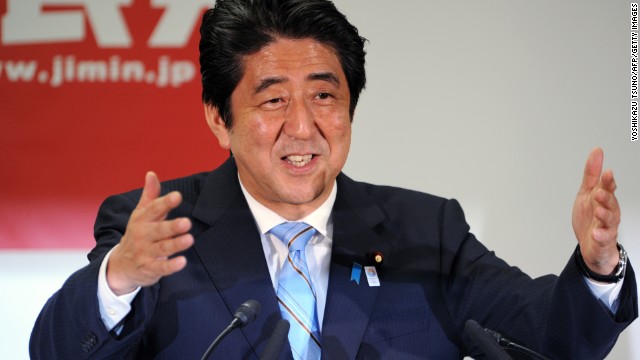
Image result for putin and abeFriday, December 16th concluded Putin's two-day trip to Japan in which he met with Japanese prime minister Shinzo Abe. The two met to talk about a territorial dispute between four islands north of Japan, but it seemed that the meetings only bore shallow business plans between Japan and Russia and, in the end, Abe walked home empty handed with still no real solution to the dispute he had hoped to resolve. 

Known to Russia as the southern Kurile islands and to Japan as the Northern Territories, these islands have created tension between the two countries for over 70 years. Captured by the Soviet Union just days before World War 2's end, ownership now lies between two countries that both claim the islands as their own, and this dispute has prevented them from ever signing a peace treaty. 

From these meetings, Abe, as well as many hopeful Japanese, hoped to find a solution to the dispute, or at least take a step towards a solution, but expectations fell very short. From the beginning, Putin seemed to show what his motives for a solution were as he arrived in Japan two hours late on Thursday, as well as being one hour late to his meeting on Friday, something quite serious to the Japanese who are very keen on punctuality. "It would be naive to think we can solve this problem in an hour," said Putin during a news conference, "but there is no doubt we need to look for a solution." However, the solution Putin and Abe worked towards Thursday and Friday seemed to be the opposite of what Putin was referencing. Both sides reportedly signed a total of 80 documents, many of which dealt with economic ties and commercial matters, including a one billion dollar joint investment fund to promote economic corporation between Japan and Russia. 

Recently, Putin has been interested in investing into Russia's seemingly undeveloped far east, and that is exactly what he got during his two-day meeting. "For me, the most important thing is to sign a peace agreement because that would create the conditions for long term co-operation." Putin said. Yet he seemed to have no problem creating co-operation between Russia and Japan with no closer step to signing a peace treaty. Putin denies claims that he was only interested in acquiring economic benefits from Japan. 

Whether Putin truly puts a peace treaty first, or he just knew how to play his cards with Abe, there is no doubt that Russia has no plans of easily giving up. Both sides claim sovereignty over the islands, and if an agreement is to be made, Putin and Abe can't be friends, which is the opposite of what Abe seems to have been portraying, referring to Putin by his first name, an odd and sometimes rude gesture in Japans formal society. If current situations continue, Abe risks losing his supporters and possibly his country.


Saturday, December 10, 2016

Puzder to put in new policy

Image result for andy puzderThursday, president-elect Donald Trump nominated Andy Puzder as secretary of labor. Puzder, CEO of CKE, the company that owns Carls Jr. and Hardees, is perhaps best known for his strong opposition towards an increase to the minimum wage, as well as ostensibly being in support of replacing human workers with machines. These viewpoints make him a villain in the eyes of low-income workers and advocates of an increased worker pay, but does that make him a villain to America as a whole? I believe not. 


As new secretary of labor, it is obvious that Puzder will not allow the 15$ minimum wage to pass, and I think that is rightly so. "I'm not opposed to raising the minimum wage rationally;" said Puzder, "I'm opposed to raising it to the point where lower-skilled workers, working-class Americans, young people, minorities, are losing the jobs they need to get on the ladder of success." Sure, raising the minimum wage to 15$ will put more money into your pocket, but at the expense of the people and businesses that need it the most. With a minimum wage increase this extreme, why would businesses feel the need to hire entry-level employees to do unskilled labor at that high of a cost? Like Puzder said, these are jobs needed to get on the ladder of success, meaning they are at the bottom. These jobs were never intended to support a family off of, but rather be an entry into the workforce, a stepping stone for something better. In which, to use Puzder's words, you then use to start climbing the ladder into higher paying, more skilled jobs. "I started out scooping ice cream at Baskin-Robins at a dollar an hour," Puzder stated in an interview, "but there is no way in the world that scooping ice cream is worth 15$ an hour...Those jobs just don't produce that kind of value like a construction job or a manufacturing job does."

In an interview with Business Insider, Puzder said machines are "always polite, they always upsell, they never take a vacation, they never show up late, there's never  a slip-and-fall or an age, sex, race discrimination case." This has drawn fire towards him, giving people even more reason to suggest that Puzder doesn't care for the people, but only the business. But what many people overlook is that Puzder may be in favor of some forms of automation, but he still supports his workers. In a Wall Street Journal op-ed article, he said, "having access to a person is important to assure smooth experiences for everyone." And, in reference to how his employees make the food, he also says, "None of these tasks can be effectively automated, and we wouldn't want them to be." Another thing that many people overlook, or choose not to look at, is that before becoming CEO of CKE, he was the general counsel and saved the company from bankruptcy, CKE restaurants now employ over 75,000 workers in the US, and nearly 100,000 workers worldwide. A high number for someone who is described as "a man whose business record is defined by fighting against working people."

Sunday, December 4, 2016

For the sake of ourselves

As people seem to become more and more upset over Trump's victory as new president, so do the reasons why we need to revise our voting system. One of those that many seem to support is the removal of the electoral college, with various reasons behind it such as it being unfair to the people that vote and it going against our democratic principles. Can we really make these claims, however? Say that the electoral college really is something not good and to be gotten rid of, is it still justifiable to say so because it goes against democracy?

Many people argue about what type of government we have. Some people saying we have a representative democracy, and some saying we don't have a democracy at all, but rather a republic. Whichever may be more right, it is still true however that under the pure definition of a democracy, our country is not 100% that. Therefore, to state that the electoral college needs to be removed because it goes against core democratic principles would be misleading, for our country was never founded on "core" democratic principles, but either way, is the electoral college so in need of removal?

Under the electoral college, smaller, less influential states are given the power to have a larger voice in the presidential decision than their population shows for. If this were removed, these states would essentially disappear, as presidential candidates would no longer have a need to campaign in such states. Meaning that only densely populated areas such as Los Angeles, Chicago, New York, etc. would become the main focus. Many people see this as a good thing, saying that if the people of a country are deciding their president, then the areas with the most population should matter the most. This proposal isn't inherently bad, yet some flaws do oppose. Most notably is the fact that it completely ignores the notion that, as a democracy, we would be a united people. In a democracy, where the people decide, shouldn't everyone matter? What this proposal brings is essentially the segregation of people into two groups: Important and non-important. Also not to mention that the needs and wants of largely populated cities are very different to those of, say small farming cities. So only caring for cities that "mattered'' the most would also essentially be created a society built only for those people. Therefore leaving the other people in the background.
Image result for most densely populated cities america
If liberals really want to remove the electoral college for the sake of democracy, then they should also fight for the removal of everything else in our government that goes against those principles: judicial review, the Bill of Rights, the administrative state, etc, but until then their pleas only sound like a faulty excuse to get what they want, and are only for the sake of themselves, not for the country as a whole. As said by writer John Yoo, "They are..only arguing to benefit themselves now, not to defend principle."

Sunday, November 20, 2016

The 49 states of America

To say Donald Trump's win as new president didn't come lightly would be an understatement. From peaceful protests to violent riots, the people of America are not afraid to show how they feel about Trump, and California is no exception. Being a largely democratic state, as well as being one of the most diverse states, over 38% of people being Latino, California may be one of the biggest contenders in this nationwide sweep to get rid of Trump. So what do its people say about this matter?

According to an article by The Washington Post, Manuel Guerrero, a resident of Santa Ana, California, "is terrified by the impending presidency of Donald Trump and how it will affect Latinos like him." He says this as he and a few dozen other like-minded people prepare to protest Trump across a highway. It doesn't stop there however. The day after Trump's victory, thousands of people marched through the streets, blocked freeways, some even damaging property and businesses.  Adriana Garcia says Trumps presidency "might subject her , the daughter of Mexican immigrants, to racist and sexist hatred she has never experienced."


Among all this chaos, what is the solution to Trump? As many believe, secession from the country seems to be a growing option. With people using the term Calexit, in reference to Britain's Brexit, people rallying in Sacramento to get a secession referendum on the 2018 ballot, even Shervin Pishevar, co-founder and co-chief of Sherpa Capitol, saying he will begin to fund a "legitimate campaign" to make California its own nation, the people of California aren't joking around when they talk about secession.

But what does all of this prove? That California is a strong, independent state, able to secede and become its own nation? How about looking at the big picture. What this shows about America as a country, and what is shows to the rest of the world. It doesn't show that America, or California, is a strong nation, but rather a weak one that is unable to keep itself together when times become rough. It shows a democratic nation that becomes so distraught over the president they chose, that they find it necessary to protest, riot, and, in this case, even consider seceding. All of this done before our new president, Trump, is even given a chance to prove himself in office. And our neighboring countries, they fear us. They fear the thought of becoming like us. My friends have told me they wont visit America because they are scared of what is happening in our country.

Trump may not be a good president, and many say he will divide our country, but right now it is our own people that are doing the dividing. A country that was once founded upon "we the people" has turning into "we will only be the people when we get what we want." And if that is the case, then we were never "the people."

Friday, November 11, 2016

The future of Japan


Since its fall in 1990, receiving the name "the lost decade", Japan's economy has been very unsuccessful in regaining the great growth it once had in the years following World War 2. Virtually always on the brink of recession, Japan's economy is in desperate need of help. Largely to blame from Japan's shrinking birth rate and aging work force, the current prime minister Shinzo Abe has been working to fix such problems. However, with recent news of Donald Trump becoming new president of The United States, even more fear has been set into the people of Japan, and an even harder task has been laid out for Mr. Abe

Quick to recover from the shocking news, by Wednesday night Abe had already called Trump to set up a meeting for the following week in New York. "In hustling to be one of the first world leaders to meet with Mr. Trump since the election, Mr. Abe is seeking to gauge the sincerity of Mr. Trump's campaign rhetoric on Japan." said Motoko Rich for The New York Times. Luckily for Japan, Abe understands what this situation might unfold and has acted accordingly. Japan relies strongly on America's military for support, as well as completely relying on America for nuclear deterrence, and the loss of any of these assets could put Japan in a lot of trouble. With North Korea becoming bolder in the testing of its atomic weapons, as well as China repeatedly sending vessels, including a warship a few months past, into disputed waters near Japanese controlled islands, tensions are increasing as Japan is put into an uncomfortable position.


Along with these issues of military protection, Japan still has its failing economy to worry about. Despite Abe's failing plans to revitalize the economy, there was still hope in the Trans-Pacific Partnership, a trade agreement between The United States and several Asian countries including Japan, which was recently approved by Japan's lower house of parliament, moving closer to ratification. However, with Trump moving into presidency, any hope of the treaty passing seems gone. As well as the increase of the Japanese yen, possibly made even stronger with Trump as president, even more issues are being made for Japan, as this increase will in turn result in a decrease in exports as well as many other problems, only making it worse for Japan's economy.

Despite Abe's seemingly unsuccessful plans to bring back Japan's economy, he has still proven to be a greater source of stability than many past leaders. You can see this from simply looking at Japan's recent history of prime ministers. Since 2007, Japan has had six different prime ministers, yet since being elected in 2012, Abe has held his position, proving that there is some form of trust between him and the people of Japan. Perhaps the real thing Japan needs is time, which it hasn't had in previous years with its yearly rotation of leaders between 2006 to 2012. Nonetheless, if Abe can successfully build a healthy relationship with Trump, along with adequate time, Shinzo Abe could finally bring Japan salvation from its steadily failing economy.


Tuesday, November 8, 2016

A better form of government?


Nearly 20 years since the last core leader Jiang Zemin, China came back to old tradition with the promotion of president Xi Jinping. To outside countries such as America, this promotion might appear as a bad move for China, but why does China or similar countries not see it the same way?
From America's creation, it was formed upon a democratic government, a government that specifically acts against one man coming to power, which is exactly what China is allowing to happen in this case. When we look at China however, opposite of America, it was born upon a communist foundation. So to the people of China, having one man be in such power is all they know, and that is how they believe China should be run. I think most can agree that the majority of American citizens are in support of a democratic government, and would frown upon any form of communism, but as I stated before, that is because our country was born on democracy, and that is all we know. To Americans, democracy is the form of government that has kept our country standing all this time, so it must be the right choice. 


Now look at China. most Chinese would be in favor of their government. In fact, when asking what my friend's opinion on promoting Jinping was, she was highly in favor, stating "He really contributes much to many aspects. He is very wise, full of wonderful policy." etc. She had no hesitation towards one man holding so much power, but rather looked only towards what he can do for the country, where as Americans might do the complete opposite. Look at only what bad things that man will do with his power; and, once again, I think this all leads down to what principles a nation was founded on.

Many might look towards China's past as evidence of a poor form of government, specifically Mao Zedong, but again, this all falls down to peoples mindsets. to many, Mao was a ruthless dictator that was terrible for China, but to the Chinese, he is rather an important figure that they look up to, and one that helped make China what it is today. Once again, when asking my friend her opinion on Mao, to my surprise, she said he was the greatest. When telling her about the "bad" or controversial acts he committed, she stated "You can't blame it all on Mao...what he contributed matters much more than what he ruined. Without Mao there is no China." 

I believe that there is no clear form of government that is better than the rest, and to know what is good for a country, you need to see what is good for the people and what they want. In China's case, promoting Xi Jinping is what the people want, and overall I believe is a step in the right direction for the country. 

Friday, October 28, 2016

A step in the right direction?

Philippine President Rodrigo Duterte makes a "fist bump", his May presidential elections campaign gesture, with soldiers during a visit at Capinpin military camp in Tanay, Rizal in the Philippines August 24
June 30th Rodrigo Duterte was elected the new president of The Philippines. Yet in under 4 months, Duterte has made numerous headlines as well as causing many controversies about his leadership style. From calling President Obama a "son of a b****" to his controversial statement "Hitler massacred 3 million Jews... there's 3 million drug addicts. I'd be happy to slaughter them," Duterte has certainly become increasingly unfavorable in the eyes of many of the world's countries.  However, that seems to be the complete opposite for the people of the Philippines. With a shocking 91% support rate, there's no doubt he has the support of his people. Even comments from a Youtube video of his inauguration show how much the people love him, with people saying "You are the hope of our nation today" "So proud of you President Duterte!" "I say this with all my heart...God bless you and keep you always." etc. With having done and said so many things that would be absurd to the normal person, it seems highly shocking that he would have such a high support rate, but to understand where the Filipino people are coming from, we have to look at the history of the Philippines.

Filipino history is filled with corruption, and an article by Time explains just how corrupt it is. Examples include former president Joseph Estrada, who was sentenced to life in prison for stealing 80 million dollars during his presidency, yet he was pardoned of his crime and is now Mayor of Manila. Former president Gloria Macapagal Arroyo, who had a vast majority of charges against her, yet still managed to be re-elected  to Congress while still under house arrest. Congressman Romeo Jalosjos, who served two life sentences for raping an eleven-year-old girl, yet was still able to be re-elected twice as well as be pardoned of his crime just ten years into his life sentence by former president Arroyo. This list doesn't stop here, however. There are numerous other stories similar to this within the Philippines. A sad reality, yet true, Filipinos have become so accustomed to this behavior that it has become almost expected of all political figures. "To outsiders, all that seems outrageous. To Filipino's, it's just politics as usual."

So how does Rodrigo Duterte stack up to all this? It's hard to say this early in a presidency, but there's no doubt that he has no problem with saying what's on his mind, as well is putting those words into action, which in turn has caused some controversies. Most notably his plan to abolish the drug problem that currently infests the country. Since his presidency, roughly 3,500 suspects have been killed through his war on crime, but not in the most humane ways. Execution methods are described as being "assassinated in public by masked assailants, killed by police without further investigation, or found as unidentified bodies on the streets," often with signs placed over them stating the crime they committed. Whether these killings are justifiable or just simply thrown under a large history of impunity is for the people of the Philippines to decide. Rodrigo Duterte is definitely not a perfect man, but I don't believe he is claiming to be one (not yet at least). One thing that is certain is that The Philippines is a country riddled with crime, drugs, and corruption, and Duterte has definitely realized that, taking it upon himself to fix these problems, in a very brash manner. Whether Dutertes actions are good or bad, it's no doubt a step in a better direction, but is he really the savior that Filipinos claim him to be? Only time can tell. 

Friday, October 21, 2016

Killed by words

America, the land of the free and the country where freedom reigns supreme. Well, not anymore. At least not freedom of speech. If you give people the freedom to say what they want, then their words might offend someone, which is obviously one of the major issues that currently plagues our country. I was being sarcastic if you didn't notice. People being offended is the least of this countries concerns, or at least it should be, yet recently this issue has become increasingly, well, more of an issue. Specifically on college campuses.

 In an article posted by Jennifer Schuessler, college students seem to be more and more in favor of putting a cap on free speech. A drastic flip from the previous generations who fought for free speech so diligently. These college students, millennials, immature young adults, whatever you choose to call them, have virtually forced their campuses to create a so-called safe haven where no one's feelings are at risk. Colleges are now being demanded to bring only safe speakers that run no risk of bringing up a topic that would not affirm every student, placing trigger warnings on sensitive assignments that some students might not agree with, even going so far as to make safe spaces equipped with soft upholstery and puppies, in case students are feeling overwhelmed. 
Image result for ohio university graffiti wall free speech
Public graffiti wall at Ohio University

Now sure, you can say that all this is making a more inviting environment and that for the sake of the students, these actions need to be enforced, but what is this really creating? This is making a generation of adults that are so scared of hearing something they don't agree with that they need to lock themselves in their rooms with a batch of puppies. essentially, they are scared of the real world and are not mentally prepared to tackle responsibilities that 100% will be thrown their way. What happened to parents teaching their children in high school how to be responsible. Telling them that they need to do this or that to prepare them for the real world. Well, now what is the point of turning your child into a responsible adult when they're entering an environment where all possible dangers have been censored. 

Another issue that colleges have been called upon to monitor are so-called microaggressions, which are described as "small, often unintentional racial or other slights." Let's take a closer look at that definition, specifically the word "unintentional". The fact that students have to be censored from saying something that was completely misunderstood and unintentional is absurd. This doesn't create a friendly environment, but rather one where people are too scared to open their mouth because of the thought of being rebuked and disciplined for their apparently offensive words. 

Even among people who are seemingly for free speech, using it to fuel a protest or something similar, quickly change their idea when they are on the receiving end of the banter. I agree that free speech is an issue, but not because people are using it as "a weapon" but rather because the people against it are too sensitive to realize there is no issue at hand. America is and should always be known for its freedom, but what these people are creating is a society that places laws simply for the sake of the people's feelings. 


Tuesday, October 11, 2016

"The Argument"

Image result for american creation joseph ellis"The Argument"; that is what Joseph Ellis evidently portrays in his wonderfully written third chapter of his book American Creation. From the end of the War for Independence to the birth of the government that has held our country together since its creation, Smith makes no mistakes in explaining every detail in between.

The war had ended, and we had gained independence from Britain's reign, however, keeping a nation together is seemingly impossible without some form of dominion over the people. The poorly made government constructed under the Articles of Confederation did very little to successfully guide our nation. Ellis explains, "It was, in effect, designed to be weak, and lacked altogether the authority to manage a burgeoning empire." Adding to that was the fact that the delegates didn't even show up to important meetings, simply because they didn't care. In fact, that attitude was ridden throughout the whole country. People just simply didn't care about being united, but rather saw themselves as separate nations. Washington realized that what America needed was a more unifying, stronger government, however, this posed many challenges as "such a national government contradicted the most cherished political values the American Revolution claimed to stand for."

Three years pass and America is on the brink of anarchy. Luckily for Washington though, he was not alone in his revolutionary thinking. Even more boisterous in thought than Washington, James Madison had seen America's pandemic in the same light. Comically described by Ellis as "an inordinately shy man, the kind who drifted to the dark corners of a room on most social occasions," as well as being one "who stood about five foot four and weighed 130 pounds," Madison grew to be one of the loudest voices in the reforming of America and its government. A little too loud for Washington however, for, although agreeing with Madison in his thinking, he was opposed to partaking in his campaign. Yet seemingly unphased by Washington's remarks, Madison virtually forced him into his cause, which proved to be a vital point in his plan.

Although quiet and reserved, Madison's argument style was strikingly effective. "His style, in effect, was not to have one. As a result, his arguments during debates tended to arrive without rhetorical frills or partisan edges, but rather with the naked power of pure thought." Ellis further explains that he was "the kind of frustrating opponent who always had more relevant information at his fingertips and who also somehow understood the logical implications of your argument better than you did." This proved to be true as Madison left his opponents speechless with his never before heard concepts. From dividing the government into three branches to stating that a larger republic actually created equality amongst power, Madison's opponents had nothing to argue his points. Things were going perfectly and "events were flowing in a perfect pattern." However, Madison wasn't indestructible. Once recollected, the anti-federalists did not take lightly to Madison's Virginia Plan, and, in fact, countered it with a plan of their own known as the New Jersey Plan. Eventually agreeing on a solution known as "The Great Compromise", neither parties were left happy, for this solution wasn't a solution at all, but rather a statement saying that "the only workable solution was to leave the sovereignty question unclear." Washington and Madison took this to heart, "interpreting the compromise as a devastating defeat."

Although shaken, Madison did not give up. He knew that the real task was still ahead of him; ten months to be exact when the ratification debates would take place. Different from past events, these debates were "open to the public and covered by the press." Madison knew that all hope in making his great idea for a new government work landed on winning these arguments. As great as Madison was, he still wasn't the best. This proved true when, a wild card, Patrick Henry appeared, quickly becoming one of Madison's most formidable opponents. Both having distinctively different arguing styles as put by John Marshal, "Mr. Henry had without a doubt the greatest power to persuade," and "Mr. Madison had the greatest power to convince." Henry was determined to not give up, however, in the end, Madison's shear knowledge proved stronger. The final votes were in (89-79) and the debates were over. Madison had succeeded.

Ellis' writing is both simplistic and impactful. Although the constitution was largely of Madison's accord, Ellis writes in a way that invites all aspects forward, making this chapter focus on "The Argument" as it relates to how our constitution is defined; an argument that will never cease to invoke question, yet still making clear that "no man was better equipped to understand the irony of it all than James Madison." 

Monday, September 26, 2016

A pretty "good" rant about a pretty "good" debate, I guess

Let's jump right in. Immediately after the debate, it seemed that the majority was saying that Clinton overpowered her opponent while Trump was somewhat weak and lacking. I disagree with this, to an extent. Like some of the other reporters were saying, I think Trump had a good opening. From the very first question about creating jobs, Trump had some strong points that overpowered Clintons. Something that really bothered me about Clinton's answer was when she talked about taxes. Particularly increasing the tax for the wealthy which will, in turn, pay for expenses of the lower classes like college debt. This, however, doesn't solve any problems, only creates more. Making the rich pay more to pay for the lower classes takes away a key element of why America is a great country. A country where you can work hard, and with your hard work you can become successful and be that wealthy class, feeling good about your accomplishments, but what Hillary wants to do only makes a generation of lazy people. For example, Why should students put any motivation into college, getting a job or career etc. when everything is already paid for them. People need to work hard for their accomplishments rather than it being paid for them when times get tough. As I said earlier, I think Trump had a strong debate, but to an extent. Shortly after the first half of the debate, maybe even less some say, he started to fall, and I think this is where Clinton's political experience really shined. Even some issues that she answered poorly, Trump didn't have anything of significance to exploit her either. When the issue of race came up, Clinton talked very heavily about the police, making little indications that it could be the people's fault, but just the police. I think Trump could have been daring and addressed that, but he didn't, instead he talked about something different which was, like many of his other answers, still weak and in some instances off topic. The fact is Hillary was calm and collected and knew how to answer each question, as well as bait her opponent, which was very successful. I think Trump really could have shined in this debate, but he was too caught up in defending himself against little remarks Clinton would make towards him. Occasionally he would rise back up, but only to fall down again to Clinton's superiority. Trump has the potential to be great, but this debate really showed who has more experience. Clinton was on the offense for the majority of the time while Trump was stuck under her foot, defending himself against her rather than building on his own opinions as well as exploiting "Secretary Clinton's." 

Friday, September 9, 2016

Harambe, Save Us

Image result for harambe angel
Harambe. Our lord and savior who was nothing but loving and kind to this world. Subjectively thinking that is, as some people don't think this, just as some people don't find the humor in this funny either. That is exactly what two RA's from the University of Massachusetts thought when Harambe memes started surfacing around their dormitory. But not only did they find them unfunny, they go so far as to say that these jokes "are not only derogatory but also micro-aggressions to some UMass students.''
           As it turns out, Harambe is actually the name of UMass's residential community for students of African heritage, and this is so concerning to these RA's that they say "any negative remarks regarding 'Harambe' will be seen as a direct attack to our campus's African American community." Anyone reading this can see just how ridiculous it is. These RA's need to look up the definition of "direct attack" if they think that jokes about a now famous gorilla will have any reference to a small campus community that almost nobody knows about.
 But it doesn't end there. What better way to follow that statement by saying that these phrases also infringe upon the infamous Title IX. This, of course, is in reference to the ever so popular hashtag #****soutforharambe. The RA's further explain by saying that phrases such as the one stated previously "encourage the exposition of body parts." Therefore it "runs the risk of being reported as a Title IX incident."
Let's take a pause here. These two people say that it "runs the risk" of violating Title IX. However, if you actually read Title IX it states "No person in the United States shall, on the basis of sex, be excluded from participation in, be denied the benefits of, or be subjected to discrimination under any education program or activity receiving Federal financial assistance." Sure, the hashtag may have a sexually vulgar word in it, but that's it. It is not specifically referring to anyone. It is just a neutral statement made to get some laughs, and it has definitely worked. Yet to go so far as to say that this phrase is potentially sexually assaulting and categorized as a racist micro-aggression is just ridiculous, and only adds to the confusion and controversy that is already behind Title IX.

If these two RA's find this such a problem, maybe they should try to begin a Kickstarter campaign to start funding cyber police, but to be honest, the only problem in all of this is the fact that someone thought telling the internet to stop something would do anything other than make the problem worse. One could argue that that alone is more outrageous than thinking an internet fad about a gorilla was something of concern. 

Monday, September 5, 2016

Our future generations

Image result           For nearly 20 years, ISIS has been causing terror around the world and recently, they have been gaining more and more traction as we learn more about just how rigid their thinking is. Recently, news from USA Today tells us about "how the Islamic State turns children into terrorists." A jerking title, it continues by stating that "most terror groups find it difficult to rationalize or explain child recruitment." But not ISIS. In fact, they thrive on that notion and are seemingly proud of their achievements and possible future it may produce. However, these children obviously do not want to follow in ISIS's footsteps. Their teachings go against all normal human morals, and they know this.
There are four main steps to their recruitment process and, surprisingly enough, the first step involves a heavy sugar coating of their motives. They seduce these children by giving them toys, candy, games, even ice cream. Making them look like the good guys. Yet once this first step is complete, the true brainwashing begins. To desensitize them to violence as much as possible, they make these children watch and attend be-headings, eventually participating in them. But why is this necessary? Well, it's obvious, the only way to make anyone think for a second that what ISIS is doing is good is to completely get rid of their moral conscience on what is good and bad and to rewire it to think that the murdering of innocent people is something to be praised. They know that the only way to gain followers is to make them go against their natural conscience, and what better way than to start with children. While their minds are still developing, they are easy targets to brainwash into senseless humans.
After the children have been riled up with pointless toys and candy, they are thrown into harsh military training. Survivors have described this as "sleeping on flea-ridden mattresses, being beaten with sticks, and live fire training." However, the children don't question this. At this point, they have already accepted this new reality and are even said to "graduate with a deep camaraderie with fellow troops."

Let's remember that these are children. Most will view them with sorrowful eyes, but that soon changes once you find out they are responsible for a terrorist bombing. But not forced against their will, actually believing that what they are doing is right, and this is exactly what ISIS takes pride in. This shows just how much, or rather how little, the Islamic State values not only the lives of others but also the lives of their own people, their own children. 

Friday, August 26, 2016

equality for all

The LGBT movement is one that, like many others, cries for equality. However, no matter how much you yell the word equality, it's never going to become true, for both the LGBT and religious side of the coin. Some Christians might be saying "homosexuality goes against my religion, and I should have a right to express my beliefs." Maybe that way of thinking would hold up if our government was still running under Christian doctrines, but it's not. Christianity is on the downfall, and a new age of secularity is rising, and it's rising fast. When it comes to homosexuality and gay marriage, Christianity already lost, and those select few mentioned earlier need to realize that Christianity is the obvious minority, and their cries for equality will be heard by no one, or rather, won't change anyone's mind. So now Christians are left with a choice. One that will create two different groups, and has been every time an issue similar to this comes up. There will be those who stand firm to their faith and stick to what they believe, and there will be those that fold to the pressures of the secular viewpoint.  They will simply adopt this new principle into their beliefs as if it was always something they thought was right. However, even this group of "true" Christians still has problems. Because the Bible teaches to be against homosexuality, many times they will translate that into a hatred for homosexuals when it should be the opposite, having a caring attitude toward them. Those churches that teach that homosexuals deserve hell for their choices and similar teachings are just another rising Westboro Baptist Church, a hate group disguised as a religion. This is a direct connection to the issue with there being equality between the two groups. How can that happen when a portion of Christians just view the LGBT community as damned souls waiting for their punishment. Without understanding for one another, there will be no change, and in the end ''equality'' will just stay an empty word to fuel the people's propagandas. 

Friday, August 19, 2016

choose what's right, or what's better?

This presidential election is not an easy walk in the park by any means. Our choices have been narrowed down to, well, not what all of us had hoped for, but in the end, someone has to be president, and people will have to choose their side, but how should one choose? What many people think is a suitable option is to simply vote for one side because they dislike the opposing, but what that creates is a one-sided mind set. "Why are you voting for Trump?" "Well, I don't like Hillary, so he has to be good right?" Sure, some of Clinton's ideas aren't the best, but neither are Trumps, so who's to decide which one is worse? Your gut feeling? This is someone who will be in charge of our country for 4 years. No matter if you support the Democratic view or the Republican, you should be willing to follow and observe both parties, and make your decision based on what you truly think would be the best decision for the nation. I am not trying to say that Clinton is Better than Trump or vice versa, but if you have that one sided mind set, then you really don't care about your choice. You can go read something negative about Trump, and with that thinking, all of a sudden you will be supporting Clinton, but for the same reason that you originally supported Trump. In the end, we never truly know how good (or bad) a president will be until they are elected, but if you are willing to let your vote be weighted solely on the fact that you oppose one's views, do some research, you just might end up voting for that person.